
President Donald Trump announced on Friday that he is “authorizing legal documents” to give American farmers and ranchers the right to process their own food — a direct swipe at the four giant companies that dominate U.S. meatpacking. The announcement, reported by The Guardian, comes as Trump faces a fierce backlash from his own party over a separate decision: pausing tariffs on up to 300,000 metric tons of imported beef to bring grocery prices down. The short version: ranchers are angry about imports, Trump is offering them deregulation instead, and it’s genuinely unclear whether the plan is legal without Congress.
Key Takeaways
- Trump says he's authorizing documents to let ranchers "process their own food," targeting the four dominant meatpackers.
- The trigger: backlash over pausing tariffs on up to 300,000 metric tons of imported beef.
- The USDA promises details "next week"; the legal authority is unclear and a related bill is stalled in Congress.
- Even ally Rep. Thomas Massie says it "should be a law, not just an executive order."
What Trump actually said
In a statement posted to Truth Social on Friday, Trump praised farmers and ranchers as “smart, efficient, and immaculately CLEAN” and claimed agriculture had “always been a number one priority for me,” according to The Guardian.
Then he turned to the meatpacking industry. “For years I have heard that they have had a tremendous problem with the Big Processors, who many say are a nasty Monopoly,” Trump wrote, referring to the food processing companies that slaughter and package most American beef. “There are, essentially, 4 of them, a very non competitive number, and they make life miserable for our wonderful Farmers and Ranchers, and I can’t let that happen, can I?”
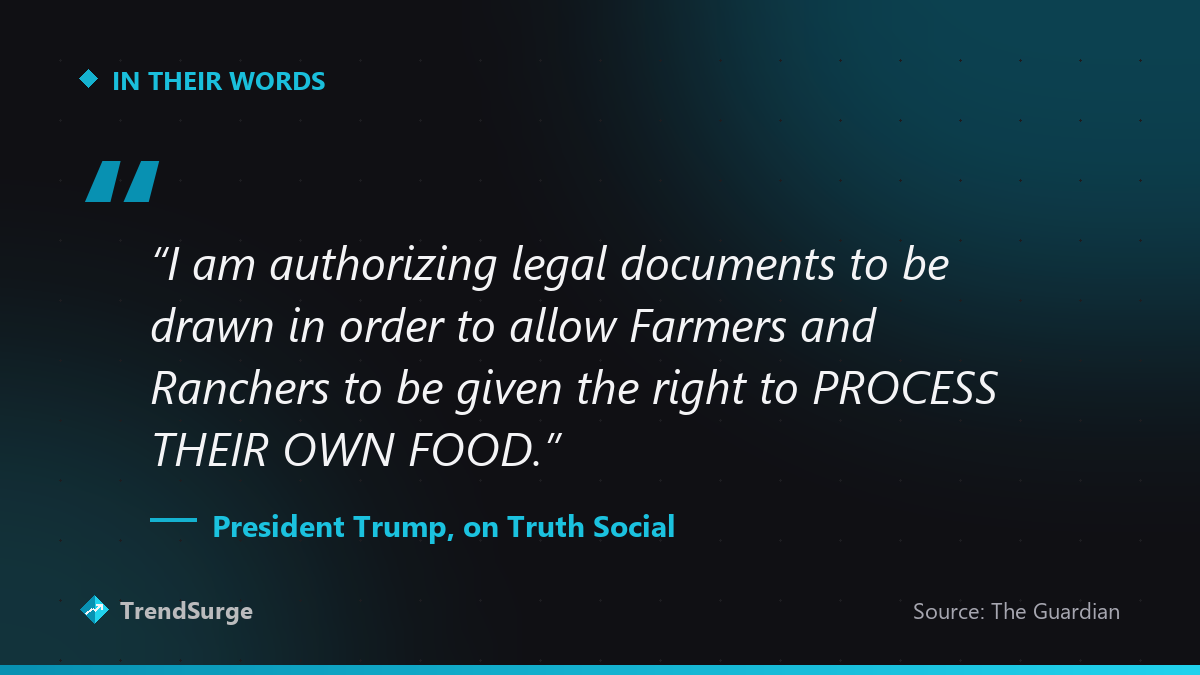
The operative line came next: “So, in order to break this powerful monopoly, with much of its ownership based outside of the U.S., I am authorizing legal documents to be drawn in order to allow Farmers and Ranchers to be given the right to PROCESS THEIR OWN FOOD. This should move quickly.”
The backstory: a beef import decision that enraged ranchers
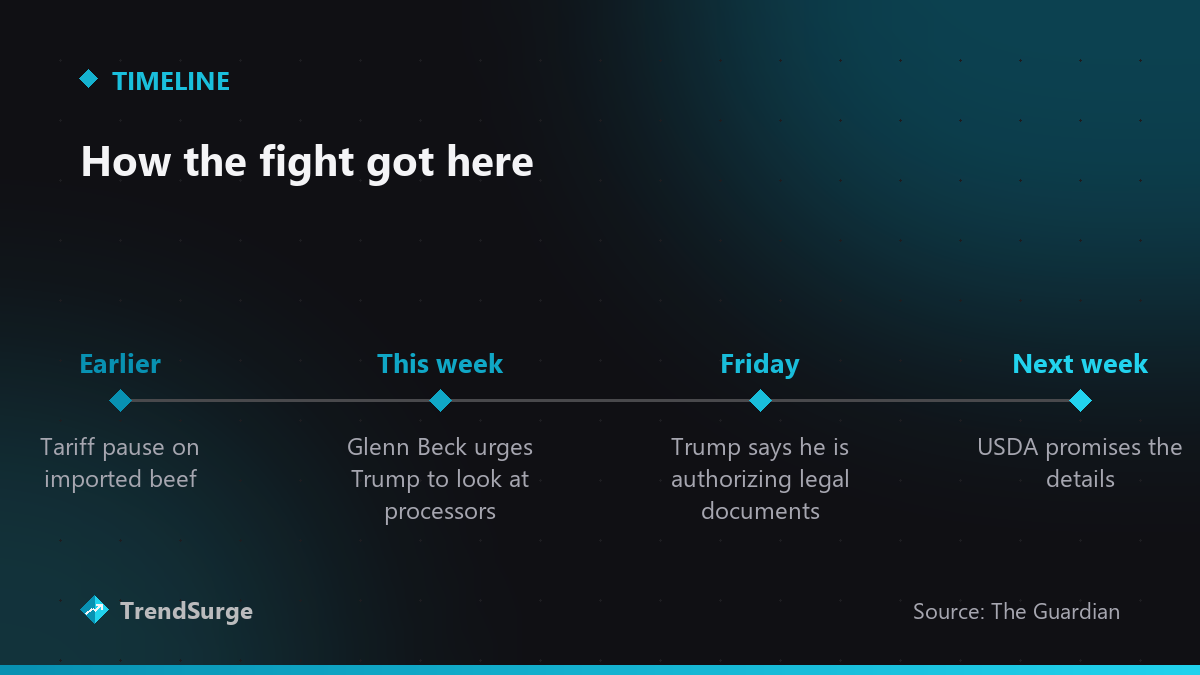
This announcement didn’t come out of nowhere. The Guardian reports that Trump has been sharply criticized — including by Republican lawmakers — since deciding the U.S. would temporarily import up to 300,000 metric tons of foreign beef without charging higher tariffs, an attempt to lower beef prices for consumers.
Ranchers saw it differently. Republican lawmakers warned that “flooding” stores with imported beef would hit U.S. ranchers at the worst possible moment: the American cattle herd is at a 75-year low, and cheap imports could discourage ranchers from rebuilding their herds, per The Guardian.
There’s also a specific media moment behind the pivot. Earlier in the week, Trump sat for an interview with conservative commentator Glenn Beck — himself a ranch owner — who urged the president to “look at” what he called the “meat processing cartel” and suggested easing regulations so ranchers could slaughter their own cattle and sell the meat, The Guardian reports. Days later, Trump announced essentially that.
Why meatpacking is such a sore spot
The complaint Trump is channeling is one ranchers have made for decades: while thousands of independent producers raise cattle, the slaughter and processing step runs through a small handful of giant companies — “essentially, 4 of them,” as Trump put it. That concentration means ranchers often have little bargaining power over the price they get for their animals, while consumers still pay high prices at the store.
Under the current system, meat sold commercially in the U.S. generally must be processed at facilities subject to U.S. Department of Agriculture inspection. For a small rancher, that can mean long waits for slots at distant processing plants — and it’s the reason “let ranchers process their own meat” has been a rallying cry in parts of farm country. Trump’s framing adds a nationalist edge: he emphasized that much of the processing industry’s ownership is “based outside of the U.S.,” according to The Guardian.
The USDA says details are coming “next week”
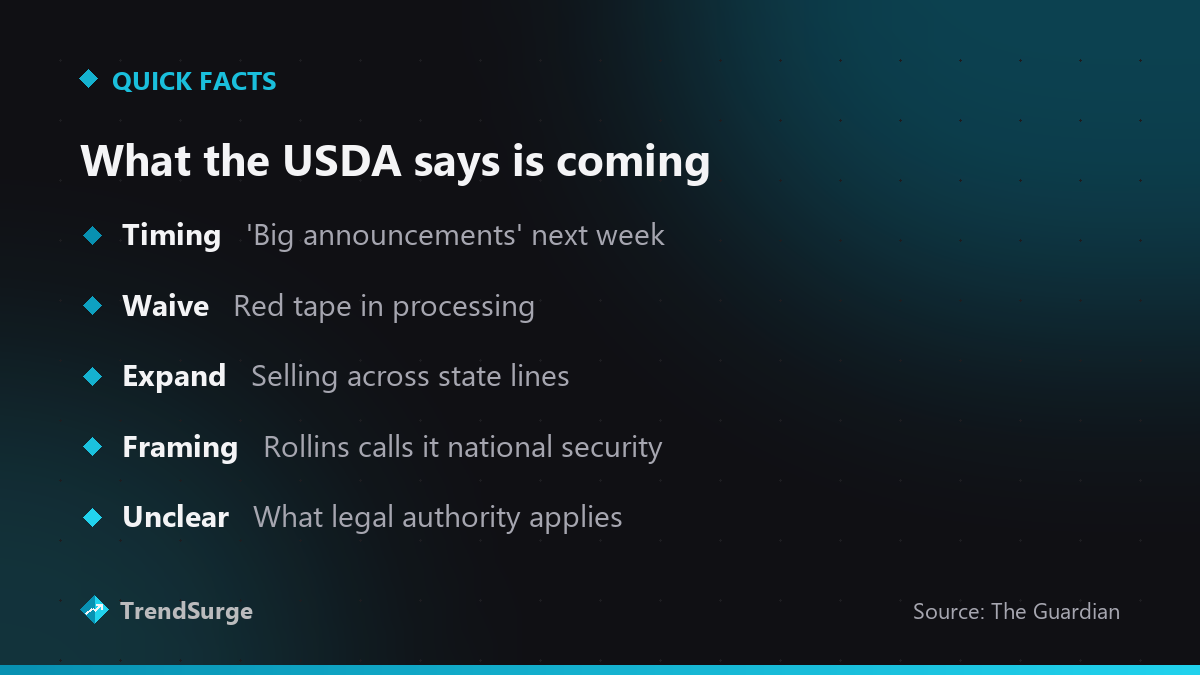
Agriculture Secretary Brooke Rollins said there would be “big announcements” in the coming week to put the president’s plan into effect, The Guardian reports. She cast the issue as “a matter of national security” that the U.S. can “feed and fuel ourselves.”
Rollins sketched the outline of what the administration intends to do: waive “red tape in processing,” expand ranchers’ ability to “sell across state lines,” and other unspecified measures. That last item is significant — under current rules, meat processed under state inspection programs generally can’t cross state lines, which sharply limits how far a small producer can sell.
The legal catch: can an executive order actually do this?
Here’s where the plan gets complicated, and The Guardian is blunt about it: it is not clear what authority the administration has to enact these changes. Federal meat inspection requirements are set by law, with strict regulatory requirements in place — they aren’t a policy the White House can simply switch off.
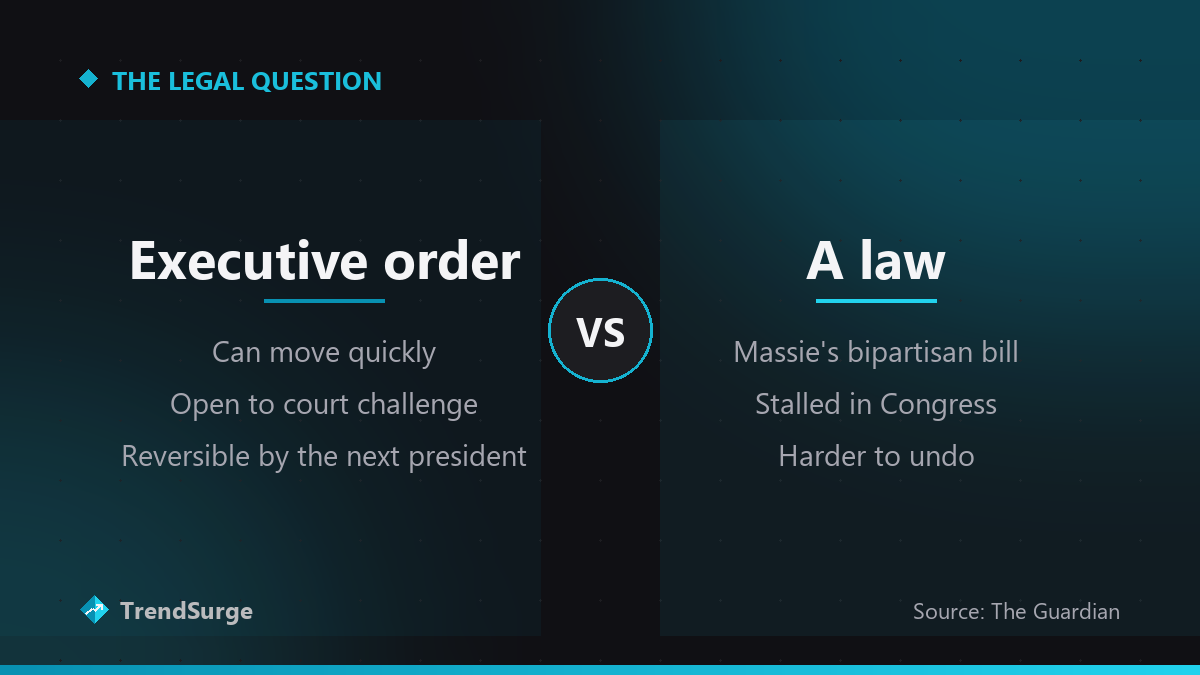
The tell comes from inside Trump’s own coalition. A bill that would ease USDA inspection requirements for small ranches and farms selling meat directly to consumers already exists — and it’s stalled in Congress. Thomas Massie, the Kentucky Republican who co-sponsored that bipartisan bill, reacted to Trump’s announcement by calling the president’s action “great” but adding the crucial caveat: “it should be a law, not just an executive order,” per The Guardian.
Translation: even the plan’s biggest congressional ally is warning that an executive action could be legally fragile — vulnerable to court challenges or simple reversal by a future administration — in a way that legislation wouldn’t be.
The food safety question
Any move to let producers bypass USDA-inspected processing will run into the reason those inspections exist in the first place: federal meat inspection is the system that checks animals and carcasses for disease and contamination before meat reaches consumers. The administration’s announced approach — waiving processing “red tape,” in Rollins’ words — leaves open exactly which safeguards would be relaxed and which would remain. Those specifics, promised for next week, are the difference between a modest expansion of existing small-producer exemptions and a genuinely dramatic change to how American meat reaches the market. Until the actual “legal documents” Trump referenced are published, that question is unanswered.
What happens next
The immediate milestone is the USDA’s promised announcement week, when Rollins is expected to detail the mechanics: what gets waived, who qualifies, and under what authority. Watch for three things. First, the legal instrument — whether this arrives as an executive order, USDA rulemaking, or something else determines how quickly it takes effect and how easily it’s challenged. Second, the reaction from Congress, where Massie’s stalled bill could suddenly find momentum if lawmakers decide they’d rather write the rules themselves. Third, the response from the meatpacking industry, which has every incentive to fight a policy explicitly framed as breaking its “monopoly.” And hovering over all of it: whether the beef import pause that started this fight gets revisited as ranchers keep up the pressure.
More explainers: when to get your flu shot this fall · what’s open and closed on Labor Day
Quick poll
Would you buy beef directly from a local rancher?
Worth knowing: under current rules, meat processed under state inspection programs generally can't be sold across state lines — changing that is one of the items the USDA says is coming, per The Guardian.
FAQ
What did Trump announce about ranchers and meat processing? In a Truth Social statement reported by The Guardian, Trump said he is authorizing legal documents to give farmers and ranchers “the right to PROCESS THEIR OWN FOOD,” framing it as breaking the “nasty Monopoly” of the four dominant meat processors.
Why is Trump doing this now? He’s facing backlash — including from Republicans — over his decision to pause tariffs on up to 300,000 metric tons of imported beef to lower prices. Ranchers say imports undercut them while the U.S. cattle herd sits at a 75-year low, per The Guardian.
Is it legal for ranchers to process and sell their own meat now? Generally, meat sold commercially must go through inspected processing facilities, and The Guardian notes it’s unclear what authority the administration has to change that unilaterally. A bill easing USDA inspection rules for small producers is stalled in Congress.
When will the details be announced? Agriculture Secretary Brooke Rollins said “big announcements” would come next week, including waiving processing red tape and expanding ranchers’ ability to sell across state lines.